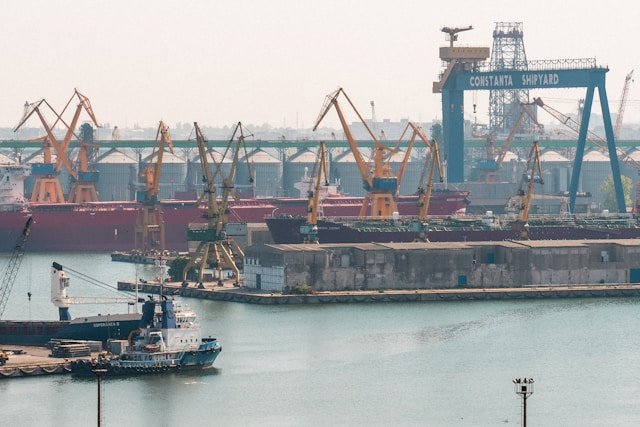
The marine manufacturing industry is an intricate and vital sector that underscores the prosperity of global trade, the integrity of naval defence, and the efficiency of maritime transport. At the heart of this industry lies the robust framework of shipbuilding, an art and science perfected over millennia but continuously evolving with modern engineering and technological advancements.
Understanding Marine-Grade Castings
One of the pivotal components that ensure ships are seaworthy, durable and reliable in the face of harsh maritime conditions is the utilisation of marine-grade castings. These specialised components form the building blocks of vessels, from commercial freighters to private yachts, serving a multitude of purposes ranging from structural support to the intricacies of propulsion systems.
Marine-grade castings are manufactured to meet rigorous standards, given that the marine environment presents unique challenges such as corrosive saltwater, extreme pressures, and variable temperatures. The selection of materials for these castings, therefore, involves careful assessment of their corrosion resistance, strength, and longevity.
The Selection of Materials for Marine Applications
Materials such as bronze, stainless steel, and aluminium alloys are frequently employed for marine-grade castings due to their resilient properties. The resistance to corrosion is paramount, but so is the material’s ability to withstand the constant stress and strain that comes with sea travel. These materials also prove advantageous in resisting biofouling – the accumulation of aquatic organisms on surfaces submerged in water.
The uniqueness of each ship design demands customised solutions for components such as propellers, rudders, and housing for engine parts. This customisability allows shipbuilders to maximise the efficiency, performance, and safety of marine vessels.
The Engineering and Production Process
The engineering process of marine castings begins with a meticulous design phase where functionality and adaptability are scrupulously considered. Precision in design is vital, as even the slightest imperfection can result in failure under the extreme conditions faced at sea. High-grade software tools are employed to model and simulate the performance of these castings under various scenarios before the actual production commences.
Following design, the production of marine-grade castings takes place using techniques such as sand casting, investment casting, or die casting, each offering different benefits in terms of precision, surface finish, and cost-efficiency. The production process is also subjected to strict quality controls to ensure that each component meets the necessary specifications and tolerances.
Testing and Quality Assurance in Marine Casting
Once cast, marine grade components undergo rigorous testing to ensure their integrity. Non-destructive testing methods such as radiography, ultrasonic testing, and magnetic particle inspection are employed to detect any internal or surface flaws. These methods help preempt the potential for catastrophic failures at sea by ensuring that each casting lives up to its promise of strength and durability.
Quality assurance does not end with the casting process. The materials and products are also subjected to real-world environment simulations, where castings are exposed to saltwater, varying pressures, and temperature cycles to certify long-term durability and performance.
The Role of Marine Castings in Shipbuilding
In shipbuilding, marine-grade castings serve a multitude of functions. For the structural integrity of the vessel, they are used in the production of anchors, hull reinforcements, and keel components. In the navigational and propulsion systems, castings are used in the construction of propellers, drive shafts, and rudder assemblies. The precision that casting allows is essential in these applications where the balance, flow dynamics, and overall performance are crucial.
Furthermore, the varied and flexible nature of casting processes means components can be optimally designed for maintenance and servicing ease, thus reducing downtime and extending the life of the ship.
Innovation and Sustainability in Marine Manufacturing
The pursuit of innovation in marine manufacturing is relentless, driven by the need for more efficient, eco-friendly ships. Marine-grade castings are at the forefront of this endeavour, with ongoing research into new alloys and production methods that reduce environmental impact and enhance recyclability while maintaining the strength and endurance needed for marine applications.
Shipbuilders are not only looking for materials that deliver performance but also ones that can be produced sustainably. Advanced castings play a vital role in this respect, contributing to overall fuel efficiency through weight reduction and improved design. Furthermore, as part of the global push for greener technologies, there is increasing interest in exploring how renewable energy components can be integrated into vessels, with marine-grade castings forming the backbone of these innovations.
Conclusion
The complexity and importance of marine-grade castings in the shipbuilding industry cannot be overstated. They are essential components that support the intricate anatomy of ships, ensuring that these titans of transport navigate the oceans effectively and reliably. As we look to the future of marine manufacturing, the evolution and refinement of casting processes and materials will continue to play a critical role in helping vessels traverse the seas of success.
For shipbuilders and marine engineers, the choice of partners in producing these essential components is a critical investment in quality and performance. Companies specializing in marine-grade castings embody the craftsmanship and technological innovation essential to the continued success and advancement of the marine industry.
As the marine manufacturing landscape sails towards increased efficiency and environmental stewardship, the importance of marine-grade castings remains firmly anchored in the core of shipbuilding, proving crucial to navigating the seas of success.